
What is a customer account? How to track customer and supplier balances correctly
A customer or supplier account should show more than the total balance. It should explain which invoices, collections, payments and due dates created that balance.
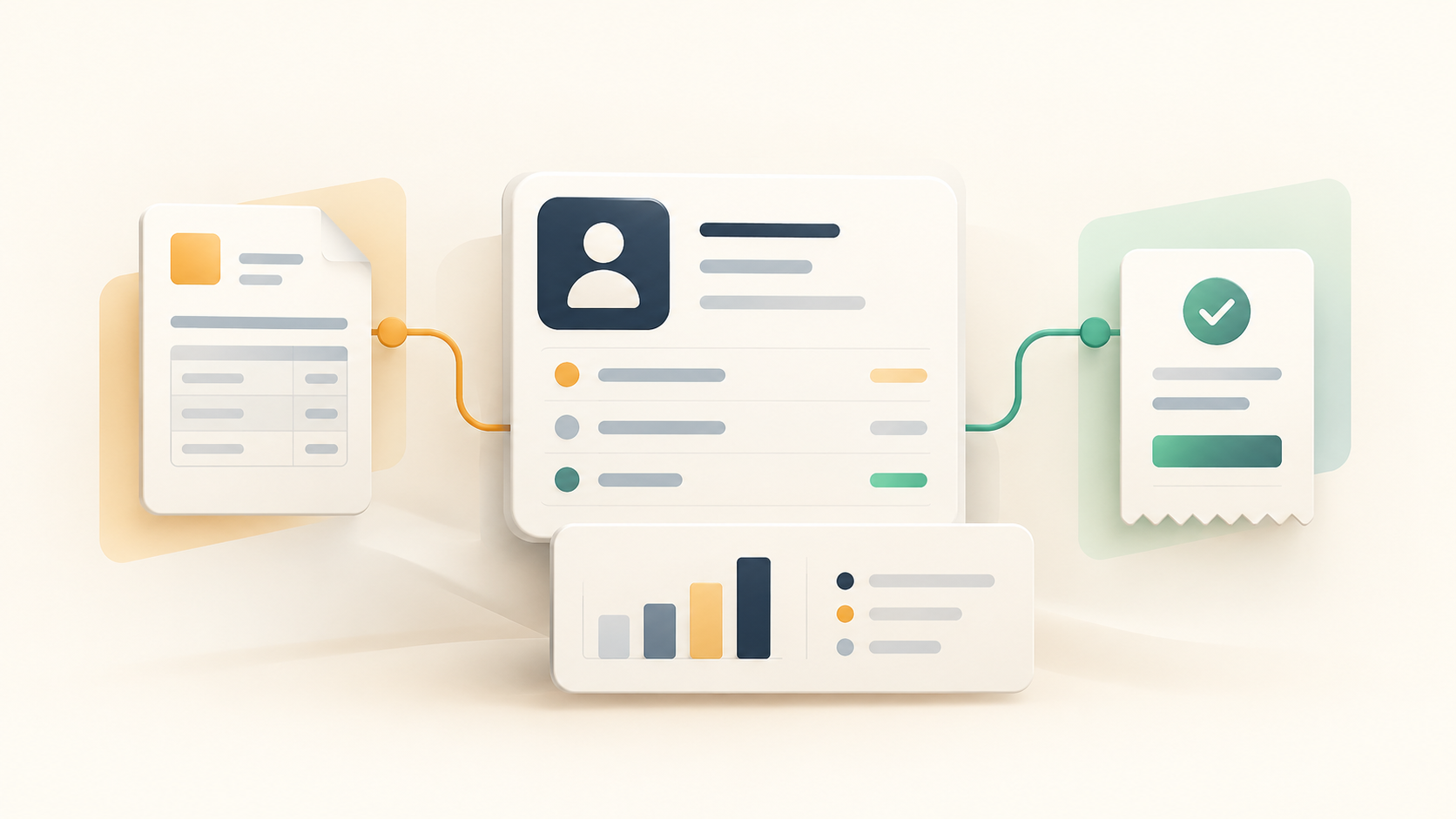
Knowing that a customer owes your business 80,000 is useful, but it is not enough. You also need to know which invoices created that balance, how much is overdue and which payments have already been received. That is the real purpose of customer and supplier account tracking. A customer or vendor account is the running record of financial movements between your business and another company or person. When you issue a sales invoice, the amount the customer owes increases. When you receive a payment, it decreases. On the supplier side, a purchase invoice creates a payable and a payment reduces it. The balance you see on screen should therefore be the result of recorded transactions rather than a number that someone changes manually. Problems usually begin when invoices are kept in one system, collections in a spreadsheet and bank movements somewhere else. Even when the final total looks correct, nobody can easily explain how that number was reached. Due dates are another important part of account tracking. Two customers may each owe the same amount, but one invoice may be due next week while another has already been overdue for three months. The balances are equal; the financial risk is not. A useful account view should therefore show both the outstanding amount and how long each invoice has been waiting. Partial payments also need to be handled correctly. If a customer pays 15,000 against a 40,000 invoice, the open amount should become 25,000. The relationship between the invoice and the payment should remain visible so you can understand exactly what is still outstanding. Supplier accounts work in the opposite direction. Purchase invoices increase what you owe, while payments reduce it. Tracking both customer receivables and supplier payables gives you a much clearer picture of the cash that is expected to come in and the cash that will need to go out. A good account screen should answer a few questions immediately: How much does this customer currently owe? Which invoices are still open? What is the oldest overdue invoice? When was the last payment received? How much do we owe this supplier? Which payments are due next week? In Kumpara, customer balances are updated through invoices and collections, and users can trace figures back to the records behind them and see overdue accounts. Kumpara Accurate account tracking is therefore not only an accounting task. It helps the sales team understand customer risk, helps management plan cash flow and gives the business a reliable answer whenever someone asks, “Where did this balance come from?”