What is bank reconciliation? How to match bank and accounting records
Your bank balance and accounting records may not always match. Bank reconciliation helps identify the reason for differences and keeps financial records clear and traceable.
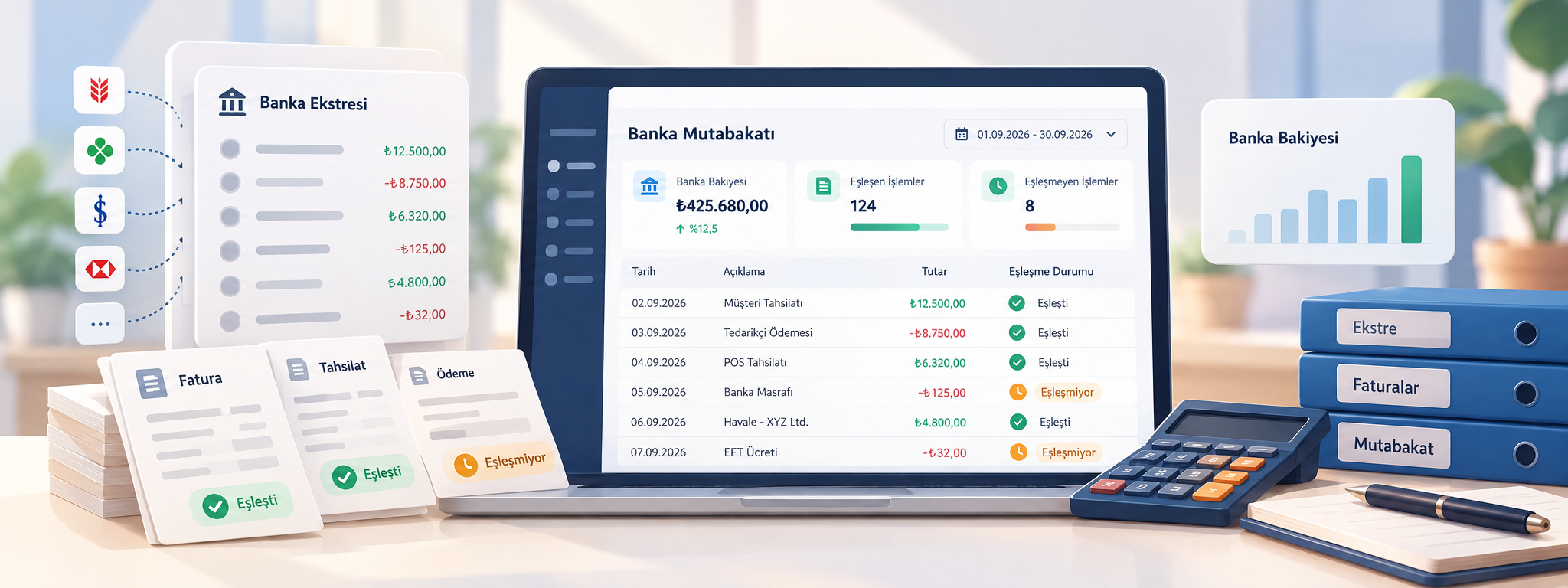
A bank account may show a balance of 250,000 while the company's accounting records show 243,500. This does not automatically mean that one of the records is wrong. A bank fee that has not yet been recorded, a newly received payment or a transaction entered on a different date can temporarily create a difference.
The important point is being able to explain where that difference comes from. That is the purpose of bank reconciliation.
What is bank reconciliation?
Bank reconciliation is the process of comparing transactions on a bank statement with the company's accounting or bookkeeping records.
The goal is not simply to force two balances to display the same number. The real objective is to confirm whether every bank transaction has a corresponding business record and to identify the reasons behind any differences.
For example, a transfer received from a customer should normally have a corresponding collection record. In the same way, a transfer fee or account charge deducted automatically by the bank should be reflected in the company's records.
When these items are not reviewed regularly, the actual position of the bank account and the cash position shown in business reports can gradually move apart.
Why do bank and accounting records differ?
Many reconciliation differences come from normal day-to-day operations.
One of the most common situations is a payment arriving in the bank before it has been recorded as a customer collection. The customer has paid and the money is already in the account, but the accounting system may still show the invoice as outstanding.
The opposite can happen as well. A payment may have been entered in the company's records before it has actually cleared the bank.
Bank charges are another common source of differences. Transfer fees, card commissions, account charges and similar deductions may appear on the bank statement before anyone records them internally.
Timing differences can also create temporary mismatches. A transaction completed on the final day of the month may appear at the bank immediately but be recorded by the business on the following day.
How is a bank reconciliation performed?
Start by selecting a specific period. Businesses with many daily transactions may reconcile more frequently, while businesses with lower transaction volumes may choose weekly or monthly reviews.
Then compare the bank transactions for that period with the company's records.
1. Review incoming money
Check whether every amount entering the bank account has a corresponding business record.
It may represent a customer payment, a refund, financing or another type of transaction. The nature of the transaction should be identified correctly.
2. Review outgoing money
Supplier payments, payroll-related expenses, taxes, bank charges and other outgoing transactions should be compared with internal records.
Matching only the amount is not enough. The date, description and related account should also be reviewed.
3. Separate unmatched transactions
Create a list of transactions that exist in the bank but not in the system, and records that exist in the system but have not yet appeared at the bank.
This becomes the working list for completing the reconciliation.
4. Identify the reason for each difference
Not every difference is an error.
A transaction may still be pending, it may have been recorded on another date, or the bank may have applied an automatic charge.
However, differences that cannot be explained should be investigated separately.
Is matching the final balance enough?
No.
A bank balance of 100,000 and an accounting balance of 100,000 do not prove that every transaction has been recorded correctly.
For example, an unrecorded customer payment of 5,000 and an unrecorded outgoing payment of 5,000 could cancel each other numerically. The final balance would look correct even though both transactions were missing.
For this reason, reconciliation should compare individual movements, not only the closing balance.
What does regular reconciliation provide?
Regular bank reconciliation gives the business a more reliable view of available cash.
It helps identify customer payments that may have been missed, reveals bank charges that have not yet been recorded and makes it easier to verify whether supplier payments have actually been completed.
It also supports accurate customer and supplier balances. When a customer payment received by the bank is recorded correctly, the customer's outstanding balance remains up to date.
Bank reconciliation should therefore not be treated only as an end-of-period accounting exercise. It should become a regular control process based on the transaction volume of the business.
What does a healthy reconciliation process look like?
A good record should make it possible to understand why each bank transaction occurred.
A collection should be traceable to the relevant customer, a payment to the appropriate supplier and a bank deduction to the correct expense category whenever possible.
The objective is not simply to make the numbers match. It is to make the movement of money through the business understandable and traceable.
When bank transactions, customer accounts, collections and payments are kept consistently, management can evaluate the financial position by understanding the transactions behind the bank balance rather than relying on a single number.